
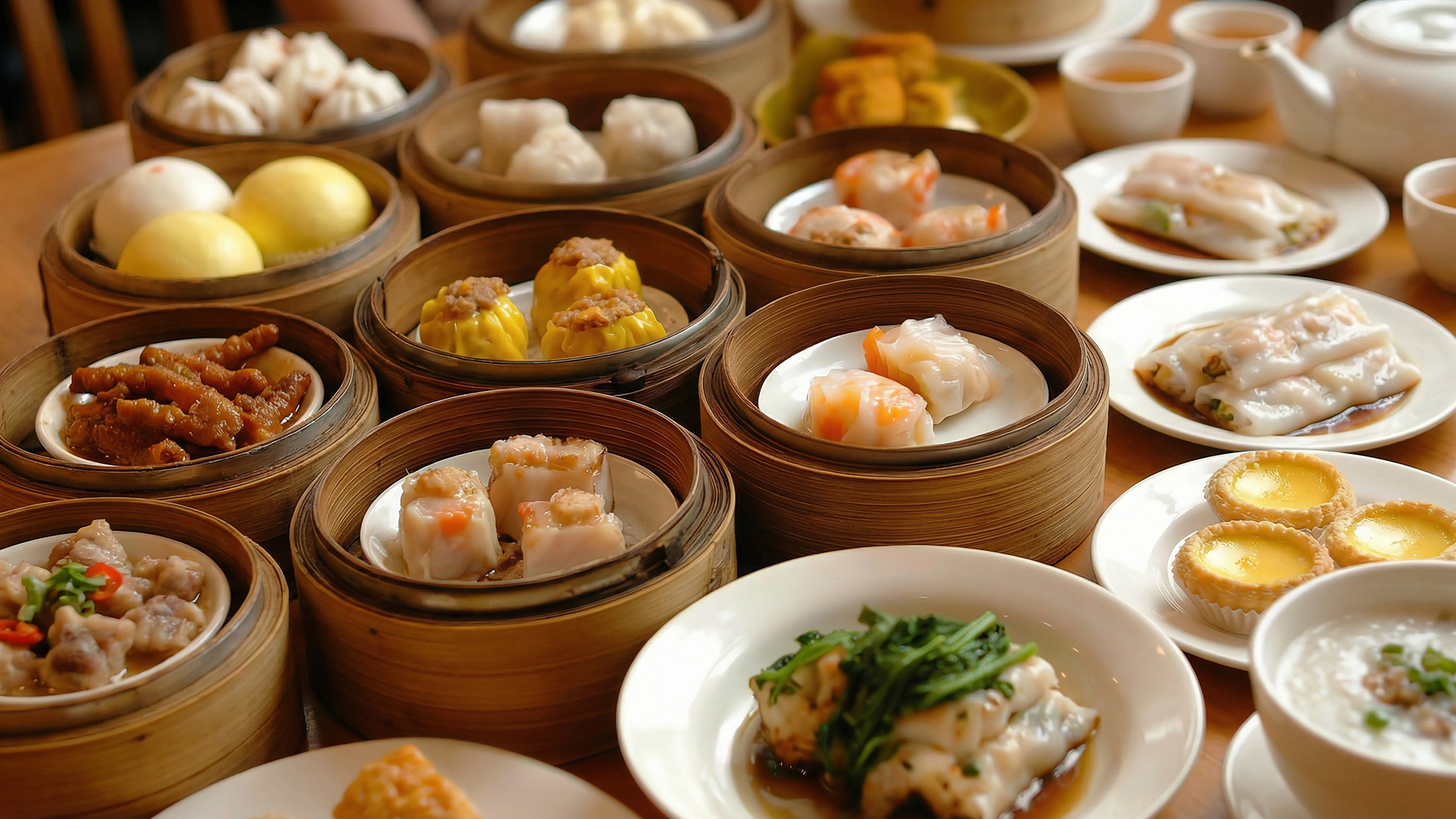
How to Choose a Frozen Dim Sum Manufacturer: 9 Questions Every Buyer Should Ask
When buyers first contact a frozen dim sum manufacturer, price is often the first question.
We understand why. Unit cost matters, especially when you are planning a private label launch, supplying a restaurant group, or building a wholesale product line.
But price alone tells you very little about whether a factory can actually deliver the product you need.
A quotation may look competitive, but what happens when the retail packaging has a different minimum order quantity? What if the sample tastes good when freshly made but becomes dry after freezing and reheating? What if the factory can produce dumplings but has limited experience with bao, siu mai, or custom fillings?
Choosing the right frozen dim sum manufacturer requires more than comparing price lists. Buyers should evaluate the factory’s production experience, OEM capabilities, food safety systems, minimum order quantities, sampling process, packaging support, export experience, and ability to maintain consistency after mass production begins.
Before placing an OEM, ODM, or private label order, ask these nine questions.
| Question | What a Good Manufacturer Should Explain |
|---|---|
| 1. Are you a manufacturer or trading company? | Who owns the facility, manages production, develops recipes, and handles quality issues. |
| 2. Do you specialize in frozen dim sum? | Experience with dumplings, bao, siu mai, wonton, fillings, freezing, storage, and reheating. |
| 3. What can be customized? | Recipe, flavor, size, filling ratio, shape, cooking method, and packaging format. |
| 4. What food safety documents can you provide? | Certifications, traceability records, allergen information, test reports, and export documentation. |
| 5. What is the real MOQ? | Separate minimums for product, recipe customization, packaging, printing, and each SKU. |
| 6. How does sampling work? | Development timeline, revision process, testing method, sample shipping, and final approval. |
| 7. Can you support retail and foodservice packaging? | Retail bags, restaurant packs, bulk packs, cartons, labels, and private label printing. |
| 8. Can you support cold-chain export? | Storage temperature, shipping terms, container planning, documentation, and logistics coordination. |
| 9. How do you maintain consistency? | Product specifications, batch records, quality checks, traceability, and recipe protection. |
1. Are You Working with a Manufacturer or a Trading Company?
The first question is simple: who actually makes the product?
A trading company is not automatically a bad supplier. Some trading companies are experienced, responsive, and capable of coordinating several factories. The problem begins when the buyer does not know who is responsible for production.
Before moving forward, ask:
- Does the supplier operate its own manufacturing facility?
- Where will your product be produced?
- Will the sample and mass-production order come from the same facility?
- Who controls the recipe and production specifications?
- Who handles complaints or quality issues?
- Can your team arrange a factory visit or third-party audit?
A direct manufacturer should be able to explain its production process without giving vague answers. It should also be able to provide relevant business licenses, food production documents, certification details, and factory information for verification.
For an OEM project, this becomes even more important. Your manufacturer may receive confidential recipes, ingredient ratios, packaging files, and launch plans. You need to know exactly which company has access to that information.
The goal is not simply to remove middlemen. The goal is to establish clear responsibility.
2. Does the Factory Have Real Experience with Frozen Dim Sum?
A factory that produces frozen food is not necessarily an experienced frozen dim sum manufacturer.
Dumplings, siu mai, bao, and wonton may appear to belong to the same category, but they behave differently during production, freezing, storage, and reheating.
A dumpling wrapper must remain flexible without becoming sticky or brittle. A bao bun must maintain volume and surface appearance after steaming. Siu mai filling must hold moisture without releasing too much liquid. Wonton wrappers must survive freezing and handling without cracking.
These are not problems that can be solved by looking at a recipe on paper.
Ask the manufacturer:
- Which frozen dim sum products do you currently produce?
- Does the factory make both filled dough products and open-top products such as siu mai?
- How does it test products after frozen storage?
- Does it test steaming, boiling, pan-frying, or microwave reheating?
- Can it adjust products for restaurant equipment and consumer home preparation?
- Can it produce both retail and foodservice specifications?
One mistake we sometimes see is evaluating a sample only when it is freshly made.
A good frozen product must be evaluated after freezing, storage, transportation, and reheating. The product that tastes best on the day it is made is not always the product that performs best after several months in a freezer.
Ask to test the product in the same way your customer will use it.
3. Can the Manufacturer Customize Recipes, Sizes, and Flavors?
For private label buyers, the key question is usually not “What products do you have?”
It is:
Can you make the product fit my market?
A capable dim sum OEM manufacturer should be able to discuss more than package design. Depending on the project, customization may include:
- Filling ingredients
- Salt and sweetness levels
- Meat and vegetable ratios
- Wrapper thickness
- Filling-to-wrapper ratio
- Individual product weight
- Product shape
- Cooking method
- Vegetarian options
- Retail or foodservice specifications
- Ingredient restrictions
- Packaging size
However, customization requires a clear product brief.
“Make it less salty” sounds simple, but it is not a complete instruction. Less salty compared with which product? Is the product intended for an Asian supermarket, a mainstream grocery chain, a restaurant, or a school foodservice program? Will it be steamed, pan-fried, boiled, or microwaved?
The more clearly you describe the target customer and eating occasion, the more useful the first sample will be.
It also helps to understand the difference between OEM and ODM.
OEM or contract manufacturing usually means the buyer already has a formula, specification, or reference product. The factory produces according to the agreed requirements.
ODM product development usually means the buyer has a product concept but needs the manufacturer to help create or adapt the recipe, specification, and production process.
Many projects sit somewhere between the two. A buyer may have a reference product but still need help adjusting the filling, wrapper, product weight, or cooking performance.
Before sharing a proprietary formula, ask whether the manufacturer is willing to sign a non-disclosure agreement and how recipe access is controlled internally.
4. What Food Safety and Export Documentation Can the Factory Provide?
Do not evaluate a food manufacturer only by the logos shown on its website.
Ask what each certification covers, which legal entity and facility it applies to, when it expires, and whether the manufacturer can provide supporting documents for review.
Depending on your market and product, you may need information such as:
- HACCP or food safety management certificates
- ISO 22000 certification
- Food production licenses
- Factory registration information
- Ingredient specifications
- Allergen declarations
- Nutrition data
- Microbiological test reports
- Packaging material reports
- Batch traceability records
- Certificate of origin
- Export health or inspection documents
- Commercial invoice and packing list support
For U.S. buyers, FDA facility registration should not be described as FDA approval of a product, label, shipment, or manufacturer. FDA explains that imported foods generally do not receive prior product approval and that applicable facilities must meet registration and import-notification requirements. dian retail products, mandatory label information commonly needs to appear in both English and French, subject to the applicable product and exemption rules. The final packaging should be reviewed for the specific product, sales channel, and importer. sible manufacturer should be willing to provide production and product information. However, the importer or brand owner should still confirm the final regulatory requirements with its own customs, legal, or food-labeling adviser.
Compliance is a shared project. It should not be reduced to a single certificate logo.
5. What Is the MOQ—and What Does It Actually Include?
There is no universal minimum order quantity for frozen dim sum.
The MOQ depends on whether you are buying an existing product, modifying a standard recipe, creating a new formula, using stock packaging, or printing a custom retail bag.
Ask the manufacturer to separate the following:
- Product MOQ
- MOQ per SKU
- Custom recipe MOQ
- Custom ingredient MOQ
- Printed packaging MOQ
- Outer carton MOQ
- Trial production MOQ
- Mixed-container requirements
- Full-container requirements
Product MOQ and packaging MOQ are often two different numbers.
For example, a factory may be willing to produce 100 cartons of a product, while the packaging supplier may require a much larger quantity of printed bags. This does not mean the factory is being inconsistent. It means two different supply chains are involved.
Dong Dimsum currently lists a standard starting MOQ of 100 cartons per product line for frozen dim sum OEM and private label projects, although the final requirement depends on the product specification and packaging method.
When comparing quotations, also check:
- How many packs are in each carton?
- What is the net weight per pack?
- What are the carton dimensions?
- How many cartons fit in a container?
- Is the quotation based on stock or custom packaging?
- Are development and testing costs included?
- Which trade term is being quoted?
A low MOQ is useful only when the total project remains commercially practical.
6. How Does Sampling and Product Development Work?
A professional sample process should begin with questions, not with production.
Before developing the first sample, the manufacturer should understand:
- Target product
- Target country
- Customer type
- Sales channel
- Target product weight
- Preferred ingredients
- Reference flavor
- Cooking method
- Packaging format
- Estimated order volume
- Target launch date
- Target price range
Without this information, the factory may produce a technically acceptable sample that does not fit your business.
A typical development process may include:
- Requirement confirmation
- Initial formulation
- Prototype production
- Internal tasting and technical review
- Sample shipping
- Buyer feedback
- Recipe revision
- Frozen-storage and reheating evaluation
- Final specification approval
- Commercial quotation and production planning
At Dong Dimsum, standard initial samples generally require about seven days. Projects involving special ingredients or more complex customization may take around ten days before the first sample is ready.
A fast sample is helpful, but a controlled revision process is more valuable. Make sure each version is recorded clearly. Product weight, wrapper thickness, filling ratio, cooking time, and ingredient changes should not depend on memory or informal chat messages.
The final approved sample should be converted into a written production specification.
7. Can the Manufacturer Support Both Retail and Foodservice Packaging?
Retail buyers and restaurant buyers usually need different products, even when the food inside is similar.
| Buyer Type | Typical Packaging Requirement | Main Consideration |
|---|---|---|
| Restaurant or foodservice operator | Bulk packs or larger bags | Fast preparation, portion control, storage efficiency, and lower packaging cost |
| Asian grocery retailer | Consumer-ready retail bags | Clear product identity, cooking instructions, multilingual labels, and shelf presentation |
| Private label brand | Custom printed packaging | Brand consistency, legal label information, print MOQ, and launch schedule |
| Distributor | Multiple products and carton formats | Container utilization, warehouse handling, and SKU management |
| Club or wholesale channel | Larger family-size or multipack formats | Value perception, pack strength, and pallet efficiency |
Ask whether the factory can support:
- Retail bags
- Foodservice packs
- Bulk institutional packs
- Club packs
- Custom outer cartons
- Private label printing
- Barcode placement
- Ingredient and allergen panels
- Nutrition information
- Cooking instructions
- Date and batch coding
- Multiple pack sizes
Packaging should be discussed early.
A common project delay occurs when the product is approved but the printed packaging has not been finalized. Artwork revisions, regulatory review, printing plates, material testing, and bag production can take longer than expected.
The product and packaging schedules should be planned together.
8. Can the Supplier Support Cold-Chain Export and Delivery?
The factory price is only one part of the final cost.
Frozen dim sum must remain within a controlled cold chain during storage, loading, international transport, customs handling, warehousing, and final delivery.
Ask the manufacturer:
- At what temperature is the product stored?
- Can it support frozen container loading?
- Does it have experience with full-container and mixed-container orders?
- Who arranges the refrigerated container?
- Can temperature data loggers be used?
- Which export documents are provided?
- What trade terms are available?
- How are cartons arranged to improve container utilization?
- What happens if there is a shipping delay?
- Who is responsible at each stage of the shipment?
A low factory price does not always result in a low landed cost.
A slightly higher unit price may be commercially better if the carton size, pack configuration, container utilization, documentation, and shipping coordination are more efficient.
Before comparing two suppliers, calculate the cost per sellable unit after freight, customs, cold storage, inspection, and inland delivery—not only the price leaving the factory.
9. How Does the Factory Maintain Consistency After Production Begins?
A good sample wins attention.
Consistent production keeps the business.
Before approving a supplier, ask how the factory controls the transition from sample development to mass production.
Important controls may include:
- Written master recipe
- Approved ingredient specifications
- Product weight tolerance
- Wrapper and filling ratio
- Product dimensions
- Cooking and reheating instructions
- Raw-material batch records
- Production batch numbers
- In-process inspections
- Finished-product sampling
- Metal detection
- Retained samples
- Cold-storage records
- Complaint and corrective-action procedures
You should also ask what happens when an ingredient changes.
Agricultural products can vary by season, supplier, and batch. A responsible manufacturer should have a process for approving substitutions and informing the buyer when a material change may affect flavor, texture, appearance, allergen status, or labeling.
For proprietary products, consistency also includes information control.
The manufacturer should explain:
- Who can access the formula
- How the recipe is stored
- Whether an NDA can be signed
- Whether your formula will be used for other clients
- How packaging files and technical documents are managed
Do not rely only on verbal promises. Important specifications and confidentiality obligations should be written into the cooperation documents.
Warning Signs to Watch For
No supplier is perfect, but these warning signs deserve further investigation:
- The company cannot explain where the product is manufactured.
- The salesperson avoids providing factory or certification details.
- The quotation does not state pack size, carton quantity, or trade terms.
- The supplier gives the same MOQ for every type of customization.
- The factory promises custom packaging before reviewing the artwork or quantity.
- The sample is not accompanied by a clear product specification.
- Production lead time is promised before the recipe and packaging are approved.
- The manufacturer uses “FDA approved” as a general marketing statement.
- Quality and recipe-protection responsibilities are not documented.
- The cheapest price is offered without discussing ingredients, weight, or packaging.
A good supplier does not need to have an immediate answer to every question. But it should be willing to investigate, document, and explain.
What Should You Prepare Before Contacting a Manufacturer?
You will receive a more accurate answer if you prepare a basic project brief before requesting a quotation.
Include:
- Product name or reference product
- Target market
- Sales channel
- Preferred ingredients
- Product weight
- Cooking method
- Packaging format
- Estimated order volume
- Number of SKUs
- Required launch date
- Certification or labeling needs
- Target price range
A photograph and the message “How much?” are usually not enough for an accurate quotation.
Two products may look almost identical but have very different ingredient costs, filling ratios, product weights, packaging requirements, and production methods.
The clearer the brief, the more useful the quotation.
Final Thoughts
Choosing a frozen dim sum manufacturer is not about finding the factory with the longest product catalog or the lowest opening price.
It is about finding a manufacturing partner that can translate your product idea into a stable, repeatable, commercially workable frozen product.
Before placing an order, make sure the manufacturer can clearly explain:
- What it produces
- What it can customize
- How it controls food safety
- How MOQ is calculated
- How samples are developed
- How packaging is managed
- How frozen products are exported
- How recipes are protected
- How mass-production consistency is maintained
A reliable manufacturer should help you understand the project before asking you to commit to a large order.
Planning a frozen dumpling, siu mai, bao, wonton, or private label dim sum line for retail or foodservice?
Share your product concept, target market, packaging format, and expected order volume with the Dong Dimsum team.
Discuss Your Frozen Dim Sum OEM Project
Frequently Asked Questions
What is the difference between OEM and private label frozen dim sum?
OEM generally refers to manufacturing a product according to the buyer’s formula or specification. Private label commonly means an existing or customized product is sold under the buyer’s brand. In practice, many frozen dim sum projects include elements of both.
What is a typical MOQ for private label frozen dumplings?
There is no universal MOQ. The final quantity depends on the product, number of SKUs, recipe customization, pack size, and printed packaging. Buyers should request separate minimums for production and packaging.
How long does frozen dim sum sampling take?
A standard product adjustment may take about one to two weeks, while complex formulas or special ingredients can require more time. Shipping and revision rounds should also be included in the development schedule.
Can a manufacturer customize dim sum for the North American market?
Yes, depending on its R&D capability. Customization may include product weight, wrapper thickness, filling ratio, flavor profile, ingredients, cooking method, and retail or foodservice packaging.
What information is needed for an accurate OEM quotation?
Prepare the target product, individual weight, ingredients, packaging format, expected quantity, destination market, number of SKUs, cooking method, and preferred launch date.